Thursday, 27 March 2014

Acting Improvisation


Aims:

  • Increase creativity and imagination.
  • Improve communication and listening skills
  • Develop confidence and teamwork.


Torricelli's barometric experiment


Watch these videos:


 Torricelli performed his celebrated experiment on argento vivo [quicksilver, i.e., mercury], in Florence in spring 1644. Torricelli filled a glass tube, open at one end, with mercury. Then, closing off the open end with a finger, he tipped the tube upside down and lowered it into a basin containing more mercury. He observed that the column of mercury descended only partially, stopping at a height of around 76 cm. Torricelli was convinced that the space created by the descent of the mercury in the tube was empty, and that the force holding up the column consisted of the pressure exerted by the air on the mercury in the basin. In a letter to Michelangelo Ricci of June 11, 1644, Torricelli declared that his experiment proved two fundamental concepts: first, that Nature did not abhor the void; second, that the air had weight. The results of the mercury experiment opened a period of revolutionary change, forcing a re-examination of doctrines accepted for centuries.
  •  Observe the picture and learn

http://www.old-pz.gse.harvard.edu/ucp/curriculum/pressure/s1_lesson2_lessonplan.htm
  • Explain the experiment


Saturday, 22 March 2014

Periods – What are they? (Menstrual cycle)


This activity is the last part of a project, called “Women, hormones and applications”.

We introduced the topic with a text about the menstrual cycle and some hormones. This task is extended with a video where more hormones are mentioned. We talked about them and answered some questions.


Finally, the students have to elaborate their project, a triptych about one contraceptive method (either hormonal or non-hormonal) in order to show it to the rest of the class, as you can see in this link.

Wednesday, 19 March 2014

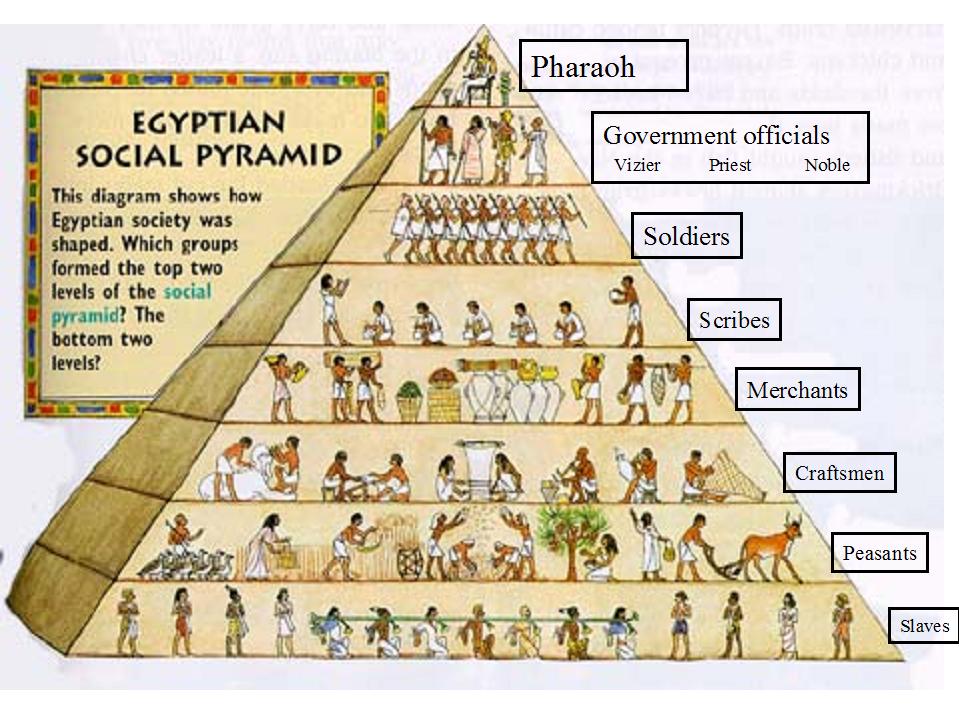
Ancient Egypt society

Read


Take the test


Speak


Cell organelles

  • Listen the cells songs


Living cells are divided into two types - procaryotic and eucaryotic

Eucaryotic Cell


ANIMAL CELL


PLANT CELL


    Now, in groups of three, make your own model and show it to your classmates.